Most car emergency kits are assembled by buying a pre-packed bag and putting it in the trunk. Then it sits there for four years, the batteries corrode, the water tastes of plastic, and nothing in it can be reached from the driver's seat. This guide takes the opposite approach: start from the four ways a car actually strands people, then buy only what solves those.
The four failures worth planning for
- You cannot get out. Doors deform and jam on impact; power windows stop working when the battery is cut.
- You cannot see or be seen. A breakdown at night on an unlit shoulder is the highest-risk scenario most drivers will ever face.
- The car will not start. Usually a battery, occasionally a tyre or a fuel problem.
- You have to wait. Cold, heat, or hours until a tow arrives — the failure that hurts people slowly rather than suddenly.
Tier one: within reach while belted
These four items must be usable without unbuckling and without opening a door. If they are in the trunk, they are not in the kit.
1. A window breaker with a seatbelt cutter
The core item. A spring-loaded carbide tip works at an awkward angle and underwater, where a swinging strike does not. The cutter solves the second exit problem: a seatbelt latch under tension will not release, and the fix is to pull slack with one hand and cut across the belt away from your body. Mount it in the door pocket, the console or on the visor — and check it once a year, because springs seize.
2. A light with a low mode
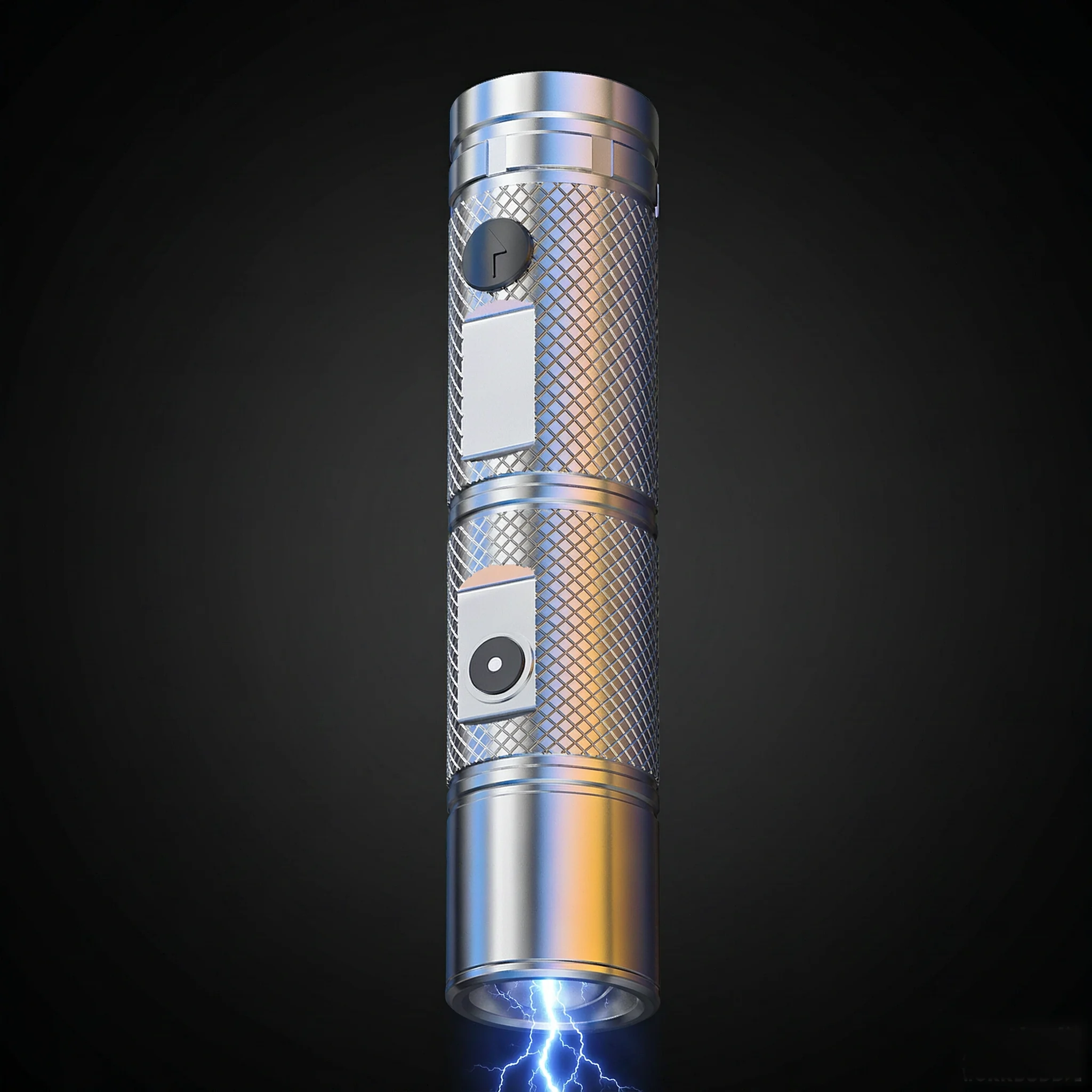
Not the brightest thing you can buy; the most controllable. You want 40–60 m of reach for identifying what is at the edge of the shoulder, and a low setting so you can change a tyre without blinding yourself. A light that only has maximum is a worse tool than a modest one with three modes — see what output actually matters.
3. A hi-vis vest
The cheapest item in the kit and the one most likely to save your life. Being visible on a shoulder at night matters more than anything you can do after you are seen. Keep it in the door pocket, not folded under the spare.
4. A phone mount and a charging cable
A dead phone is a failed emergency plan. A cable that lives permanently in the car, not the one you carry between house and office.
The first two minutes of a crash or a submersion are the entire event. Anything that requires opening the boot has already failed the test.
Tier two: trunk, strapped down
| Item | Why | Notes |
|---|---|---|
| Jumper pack (lithium) | Self-rescue on a dead battery without a second car | Charge every 3 months; cold kills them |
| Tyre inflator | A slow puncture becomes a drivable problem | 12 V models are slower but need no battery |
| Tow strap | Getting out of a ditch or snow | Rated strap, not a rope |
| Basic tools | Pliers, screwdrivers, tape, cable ties | One pouch, not a full box |
| First aid: gloves, trauma dressing, blanket | Warmth and bleeding control until help arrives | Training matters more than kit size |
| Water and a snack | The wait, not the crash | Rotate annually; heat ruins both |
| Reflective triangle or flares | Being seen before the car is | Place 30 m back, further on fast roads |
| Rain shell and warm layer | Waiting outside the car in bad weather | Seasonal swap |
What to skip
- A 100-piece tool set. You will use pliers and tape. The rest is weight and rattle.
- Aerosol cans left in the car year-round. Summer heat pushes them past their pressure margin. If you carry a deterrent spray, treat it as seasonal and check it — see how these canisters fail.
- Glass bottles of water. They freeze, burst and cut the bag open.
- Loose heavy objects. Anything unsecured in the cabin becomes a projectile at 50 km/h. A toolbox under the seat is a hazard, not a kit.
How to organise it so it still works in two years
- Two containers, one purpose each. A small reachable pouch for tier one, a strapped box for tier two.
- Label with a date. Write the assembly month on the box. Twice a year, check it against the calendar.
- Test the tools, do not just look at them. Press the breaker against a scrap of wood to confirm the spring fires. Turn the light on in every mode. Charge the jumper pack.
- Seasonal swap. Water, layers, and any aerosol come out in extremes; a folding shovel and a blanket go in before winter.
If you are starting from nothing
Buy tier one first, and buy it as a set that lives in the car permanently. The order that makes sense: escape tool, then light, then vest, then charging cable. Everything in tier two can be assembled over a few months and none of it is urgent in the way tier one is.
One more thing worth doing this week: sit in the driver's seat, belt up, and reach for each tier-one item without looking. If you cannot find it in two seconds, it is in the wrong place — and in an emergency you will not have two seconds to search.