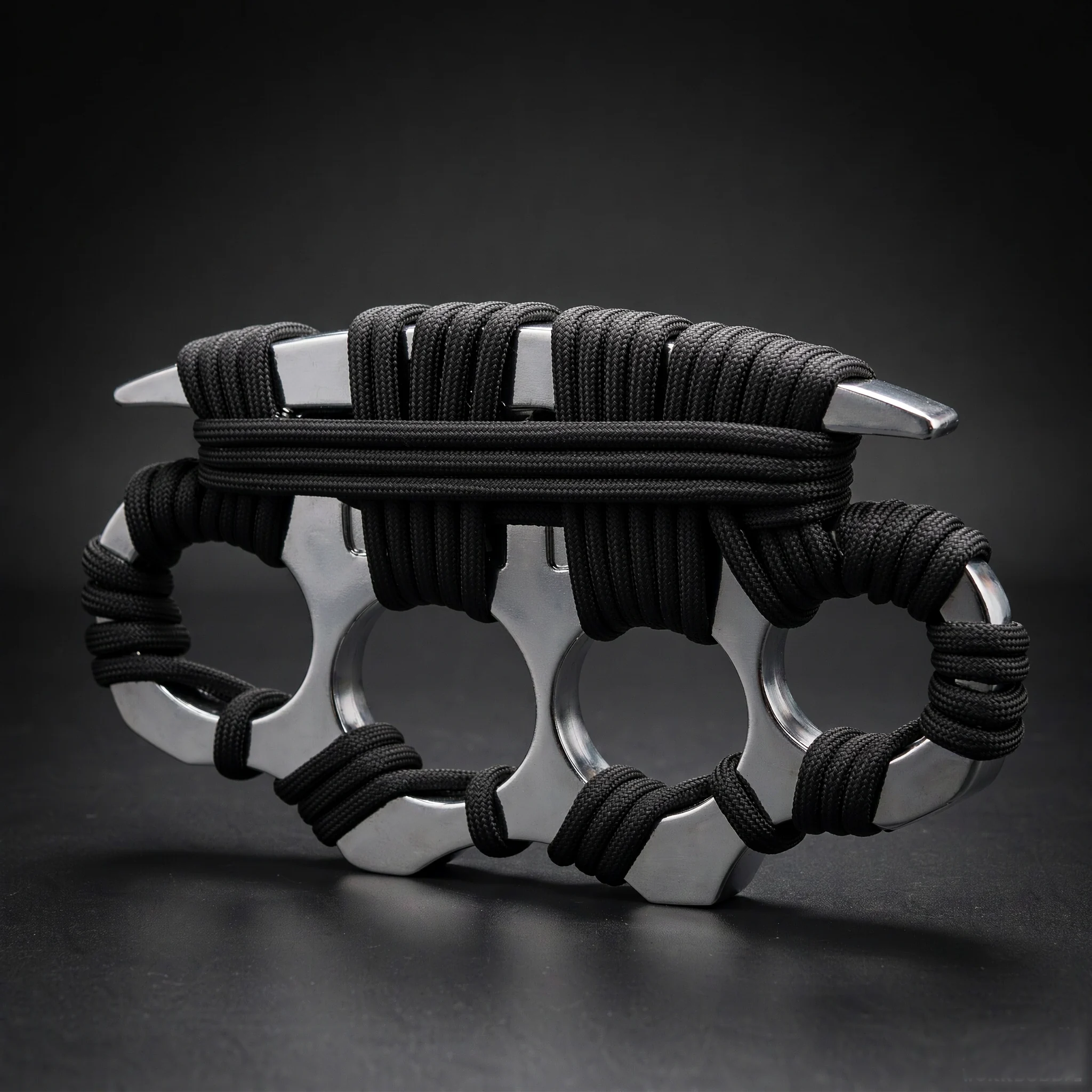
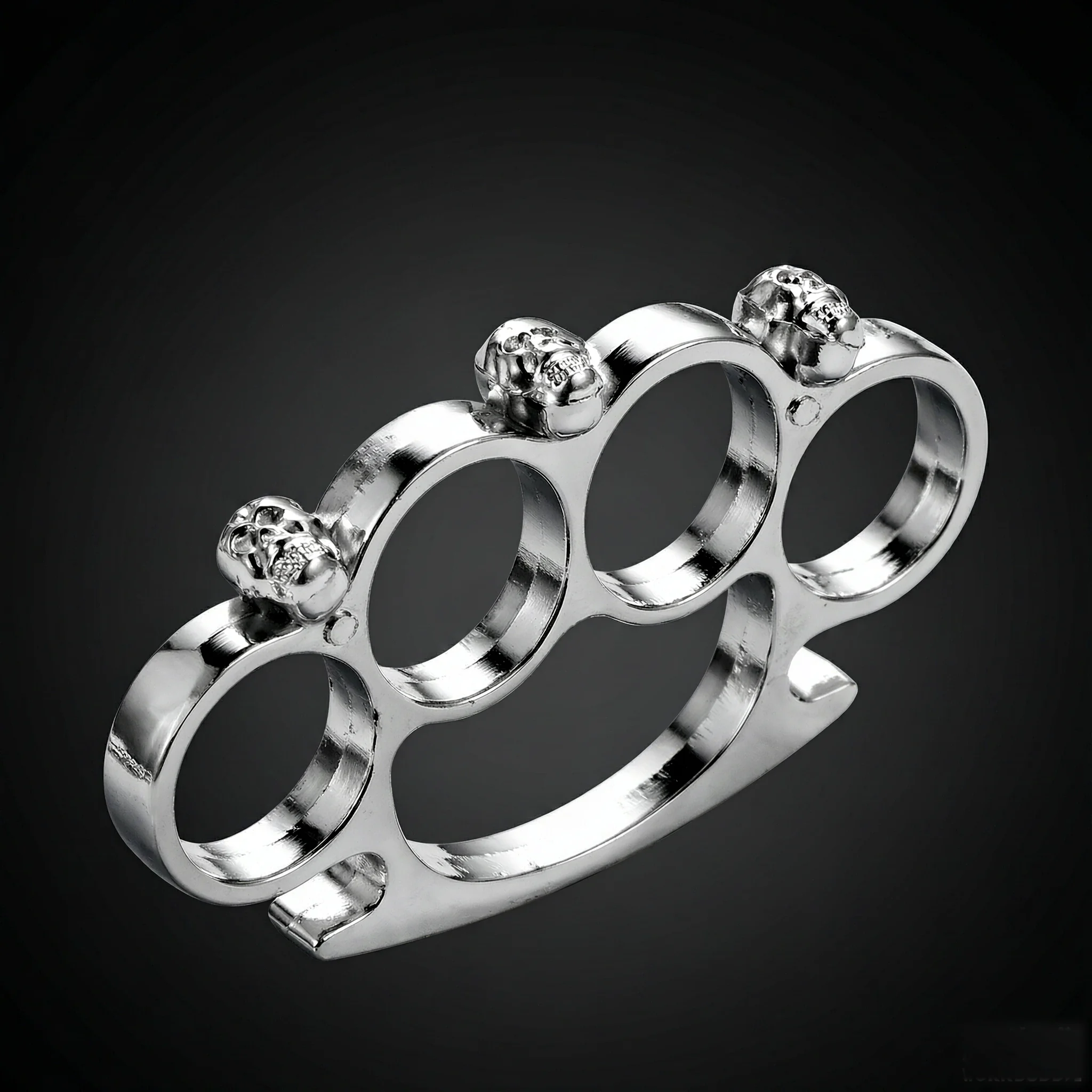
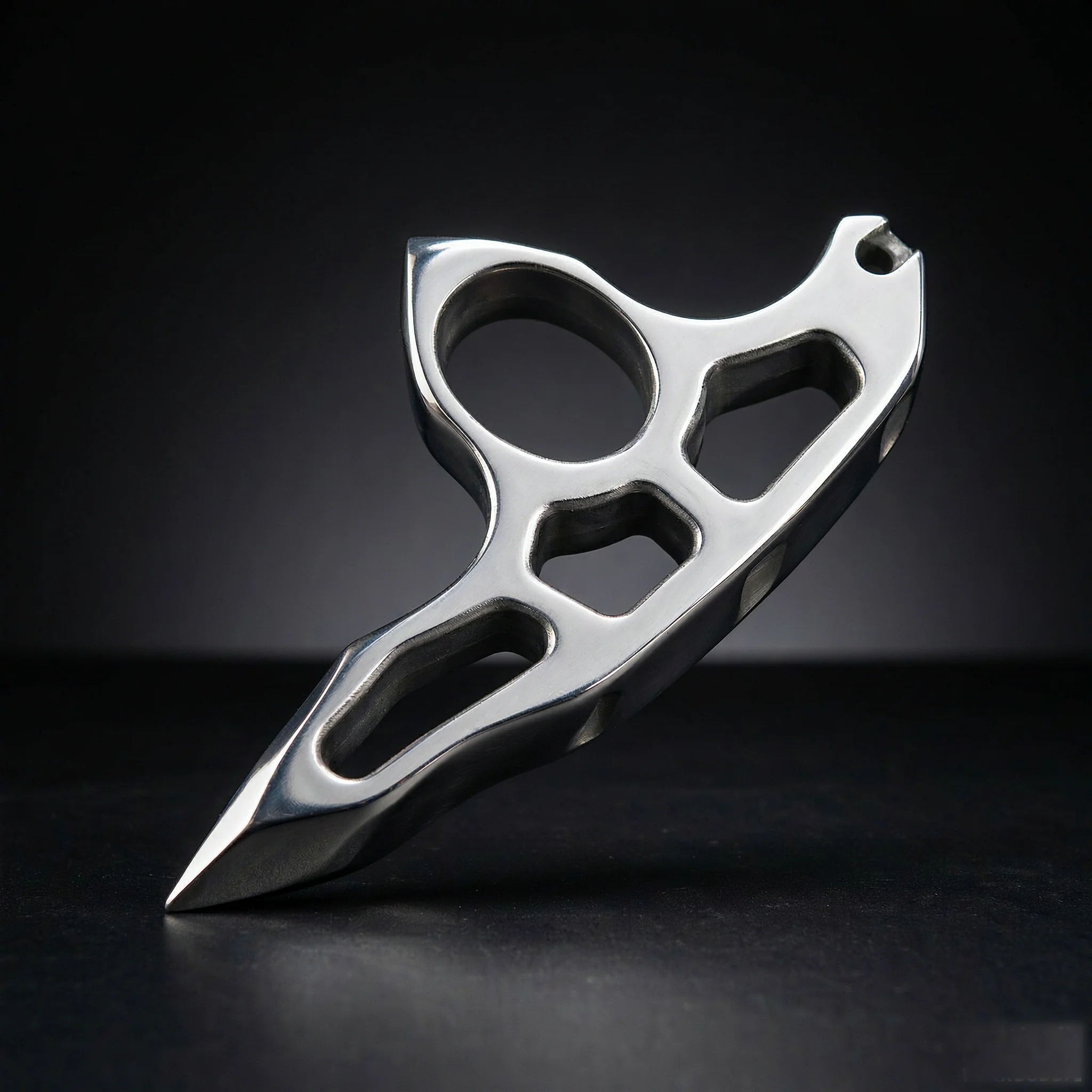
The category is called "self-defense keychains" because that is what sells, not because that is a legal category. Legally, the question is narrower: does this object match a definition in your state's prohibited weapons statute? For a large share of the products sold under that label, the answer is yes — and the label on the packaging is not a factor.
The three-part test courts actually apply
When a case goes to court, the analysis is not about the name of the product or the section of the store it came from. It comes down to three things:
- Design. Is it made to be gripped while striking? Finger holes, a palm bar, a weighted striking surface above the knuckles.
- Function. Is there any ordinary, non-combative use? A bottle opener has one. A two-finger steel tool generally does not.
- Statutory wording. Does your state use a term broad enough to cover it — "metal knuckles," "brass knuckles," "slungshot," "bludgeon"?
If a tool has two holes for your fingers and a hardened edge above them, most statutes do not need to know what the seller called it.
Where "metal knuckles" appear in the statute
Several states list metal knuckles explicitly among prohibited weapons. The ones most often cited:
| State | How it is treated |
|---|---|
| New York | Listed in Penal Law 265.01 among per se prohibited weapons. Possession alone is the offense. |
| California | Penal Code 21810 prohibits possessing, manufacturing or selling metal knuckles. |
| Massachusetts | Covered by the state's prohibited weapons provisions for knuckles. |
| New Jersey | Prohibited weapon under the state criminal code, with narrow exceptions. |
| Illinois | Listed among prohibited items in the state's weapons statute. |
This is not an exhaustive list, and it is not legal advice. The point is structural: in these states the item is prohibited by category, so the question is not how you carried it or what you intended. It is whether the object is metal knuckles.
Some listings market knuckle-style tools as paperweights or novelty items. Prosecutors are aware of this. When the object has finger holes sized for a hand and a striking surface positioned over the knuckles, the design speaks for itself.
What is not classified as a weapon
The lowest-risk everyday carry is boring on purpose. None of the following is classified as a weapon in any US state, which means the legal question becomes about your conduct, not your possessions:
- A personal alarm. Pull pin or press button, 110–130 dB. Effective at creating attention and distance, which is the outcome you actually want.
- A flashlight. Identifies what is ahead of you and buys a moment. See how much output matters.
- A whistle. Costs nothing, works when your hands are shaking, audible through walls.
- A window breaker in the car. An emergency-escape tool, not a keychain striking weapon — a different category with a different legal profile. See the escape sequence.
The gray zone: keychain knives and spikes
Between the clearly-prohibited and the clearly-fine sits a wide gray band. Key-shaped folding knives, small fixed-blade keychain tools, and "tactical pens" all depend on state definitions of a knife or dagger, blade length limits, and whether the item is concealed. A few principles help:
- Blade length is the usual threshold. Many states set limits between 2 and 4 inches for lawful carry, and city ordinances are often stricter.
- Concealment changes the analysis. A visible clipped knife and the same knife in a pocket can be treated differently.
- "Automatic" and "gravity" opening are separately regulated in many states, regardless of blade length.
- Schools, courthouses, airports and federal buildings prohibit these items regardless of state law.
Checking your own state without a lawyer (and when to get one)
- Search your state legislature site for the prohibited weapons statute. Read the list, not the summary articles.
- Note whether the item appears in the per se list or only under a general "dangerous instrument" definition. That single distinction determines whether intent matters.
- Check your city code — municipal ordinances are frequently stricter and are the most commonly missed layer.
- If the item is a borderline design and you intend to carry it daily, spend an hour with a local attorney. It is cheaper than a misdemeanor and far cheaper than a felony.
We restrict shipping of items that are prohibited in the destination state, and the product pages carry the restriction list. That is a compliance control, not a legal opinion about your situation — see the current state list.
The practical answer
If your goal is to be harder to victimize, the highest-return items are the ones that never raise a legal question: awareness, distance, a light, and an alarm. If you want a striking tool specifically, check your state first and accept that in several states the answer is simply no — and that carrying one there converts a self-defense question into a criminal one.